
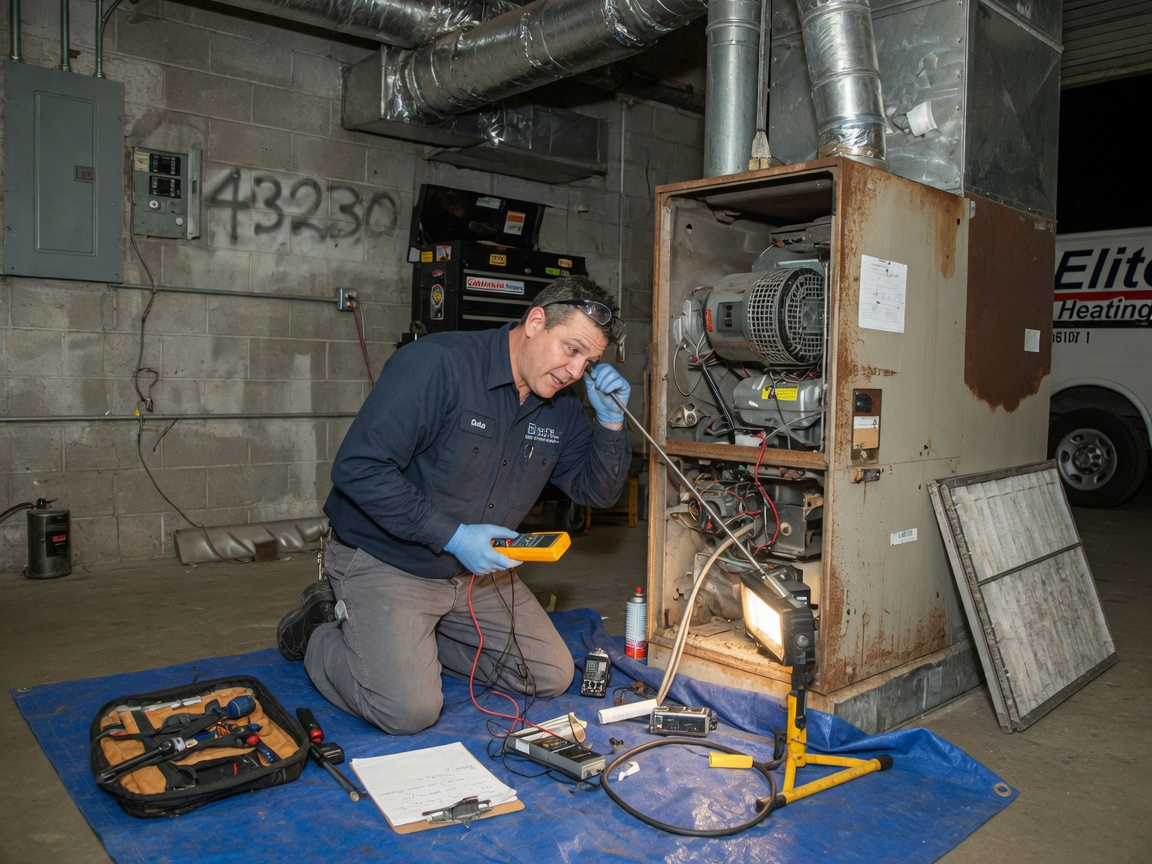
In Columbus 43230 neighborhoods like Gahanna and surrounding Franklin County streets, many homes from the 1960s and 1970s rely on forced-air furnaces with sheet-metal duct runs that expand and contract sharply once temperatures drop below freezing. These cycles often produce persistent rattling or booming that starts in the attic or crawlspace ducts and travels through the living spaces. Homeowners frequently mistake the sound for a failing blower when the real culprit is loose hangers or unsealed joints that shift under pressure changes. Ignoring the noise allows vibration to loosen more connections and eventually force the system into short cycling during peak January cold snaps.
High-efficiency models common in newer Gahanna subdivisions add inducer motors and secondary heat exchangers that generate distinct whining or humming when bearings begin to wear. Cold starts after overnight lows in the teens amplify these tones because the motor must overcome thicker oil and any accumulated condensate. A tech checking these units looks first for metal fatigue around the inducer wheel and for restricted condensate drains that can cause gurgling inside the cabinet. Addressing the noise early prevents the inducer from locking up and triggering a full system shutdown when residents need heat most.
Older single-story ranches along Claycraft Road often have flex duct that sags between joists, creating a low-frequency drone once the blower reaches speed. Technicians trace the sound by isolating each trunk line rather than replacing the entire duct system. They also check the heat exchanger for expanding cracks that can produce ticking noises mistaken for normal operation. Any such finding requires immediate shutdown to avoid combustion gas leakage into the living area.
Technician insight
In Columbus 43230 homes built before 1980 around Gahanna, the detail that catches most people out with furnace noises is sagging flex duct in unconditioned attics that only rattles once the first hard freeze hits and the metal contracts.
Booming Sound in Gahanna Ranch
A homeowner on Claycraft Road reported a loud boom each time the furnace started after overnight lows near 15 degrees. Inspection found two loose trunk-line hangers that allowed the duct to drop and slam against a joist. We re-secured the hangers with proper strapping and sealed the joints. The system now starts quietly through the rest of the winter.
Furnace Making Strange Noises Services We Offer
✓Blower Motor Noise Repair
Isolate and correct squealing or grinding from the blower assembly common in older Gahanna forced-air systems.
✓Ductwork Vibration Fixes
Secure loose hangers and seal joints that produce rattling and booming when cold air surges through 43230 homes.
✓Inducer Motor Servicing
Diagnose and replace worn inducer bearings that create whining in high-efficiency furnaces during winter starts.
✓Igniter Clicking Resolution
Stop rapid clicking from failing hot-surface igniters before it leads to no-heat calls in Franklin County winters.
✓Heat Exchanger Noise Inspection
Check for expanding cracks that produce ticking sounds and pose carbon monoxide risks in Columbus 43230 residences.
✓Fan Belt Tension Adjustment
Tighten or replace slipping belts that cause thumping noises in mid-efficiency furnaces throughout the 43230 zip code.
Furnace Making Strange Noises Cost in Columbus 43230, OH
| Service | Typical Range | What Affects It |
|---|---|---|
| Diagnostic Visit | $99–$150 | Includes full noise tracing; applied to repairs |
| Blower Motor Repair | $250–$550 | Depends on motor size and whether capacitor or wheel also needs replacement |
| Ductwork Securing | $175–$375 | Varies by number of loose sections and attic access difficulty |
| Inducer Motor Replacement | $300–$650 | Higher for condensing units with secondary heat exchanger |
| Igniter Replacement | $150–$275 | Includes testing of flame sensor and safety switch |
Ranges are typical for Columbus 43230, OH and confirmed with an exact written quote before any work starts.
How it works
- 1
Noise Assessment
Listen to the furnace during a cold start at the Gahanna address and note timing, pitch, and location of each sound.
- 2
Component Isolation
Shut down sections one at a time to pinpoint whether the noise originates in the blower, inducer, ducts, or heat exchanger.
- 3
Targeted Repair
Replace or secure the failing part using OEM or equivalent components suited to the existing furnace model.
- 4
Post-Repair Test
Run the system through multiple cycles while monitoring for recurrence of the original noise under load.
Pricing
Diagnostic visit fee credited toward any repair performed the same day.