Short cycling often stems from restricted airflow in older Gahanna homes built in the 1960s and 1970s, where undersized or blocked return ducts cause the heat exchanger to overheat quickly. In Columbus 43230 winters, when temperatures drop below freezing for days, this forces the high-limit switch to trip repeatedly and shortens equipment life. Homeowners sometimes replace filters monthly yet still face issues because dust from nearby construction along Claycraft Road accumulates faster in horizontal duct runs common to ranch-style houses.
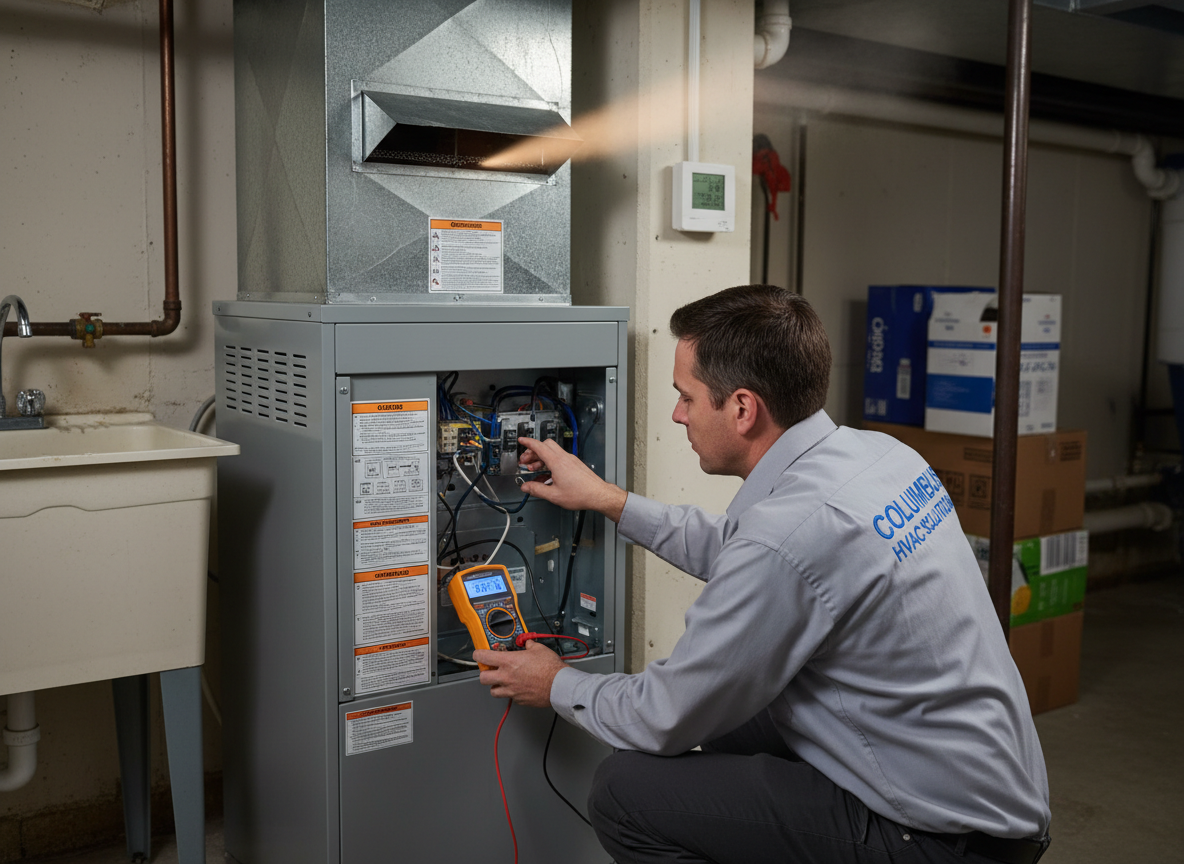
Technicians check the flame rollout switch and pressure switch settings first, as these components fail more often in homes with finished basements that trap combustion air. Ignoring short cycling can lead to cracked heat exchangers and carbon monoxide risks, especially in tightly sealed 43230 properties upgraded with new windows. Proper diagnosis requires measuring static pressure across the furnace rather than guessing at thermostat problems.
Local soil conditions around Gahanna contribute indirectly when poor drainage allows moisture into crawl spaces, rusting blower wheels and reducing airflow. This creates a cycle where the furnace runs for under three minutes before shutting down. Addressing the root cause prevents callbacks during peak heating season when service trucks are booked solid across Franklin County.
Technician insight
In Columbus 43230, the thing that catches most people out with furnace short cycling is undersized return air paths in 1970s ranch homes around Gahanna. Homeowners keep changing filters but never address the 12-inch returns that were fine for the original furnace yet choke newer high-efficiency units during long January cold snaps.
Short Cycling In East Gahanna Ranch
The furnace in a 1972 ranch on Claycraft Road ran for two minutes then shut down repeatedly. Restricted returns and a dirty blower wheel from years of pet hair were tripping the limit switch. After cleaning the wheel and opening an additional return path, the system completed full heating cycles without interruption.
Furnace Short Cycling Services We Offer
✓Thermostat Differential Adjustment
Recalibrate or replace thermostats that cycle the furnace too quickly due to narrow temperature swings common in single-story Gahanna homes.
✓High Limit Switch Replacement
Test and swap failing limit switches that shut down the furnace prematurely after short run times caused by restricted airflow.
✓Blower Wheel Cleaning
Remove dust buildup from blower wheels in older 43230 systems to restore proper airflow and stop overheating shutdowns.
✓Duct Static Pressure Testing
Measure total external static pressure in homes with long or poorly supported duct runs to identify restrictions driving short cycling.
✓Flame Sensor and Ignitor Service
Clean or replace flame sensors and hot surface ignitors that cause repeated ignition failures and short run cycles in cold weather.
Furnace Short Cycling Cost in Columbus 43230, OH
| Service | Typical Range | What Affects It |
|---|---|---|
| Diagnostic Visit | $125–$225 | Includes static pressure test; higher when crawl space access is needed |
| Limit Switch Replacement | $180–$320 | Parts and labor; varies by furnace model age |
| Blower Cleaning And Motor Check | $200–$375 | Includes wheel removal; increases with heavy debris |
| Thermostat Replacement | $150–$280 | Standard digital models; smart thermostats cost more |
Ranges are typical for Columbus 43230, OH and confirmed with an exact written quote before any work starts.
How it works
- 1
Initial Safety And Symptom Check
Confirm carbon monoxide levels and note exact run times before any disassembly.
- 2
Airflow And Filter Inspection
Examine filters, returns, and blower assembly for blockages typical in local housing stock.
- 3
Component Testing
Measure pressures, check limit switches, and test the thermostat differential on site.
- 4
Targeted Repair And Verification
Replace faulty parts then confirm the furnace completes full cycles without tripping.
Pricing
Most short cycling repairs fall into the mid-range because they require both testing and component work rather than simple filter changes.